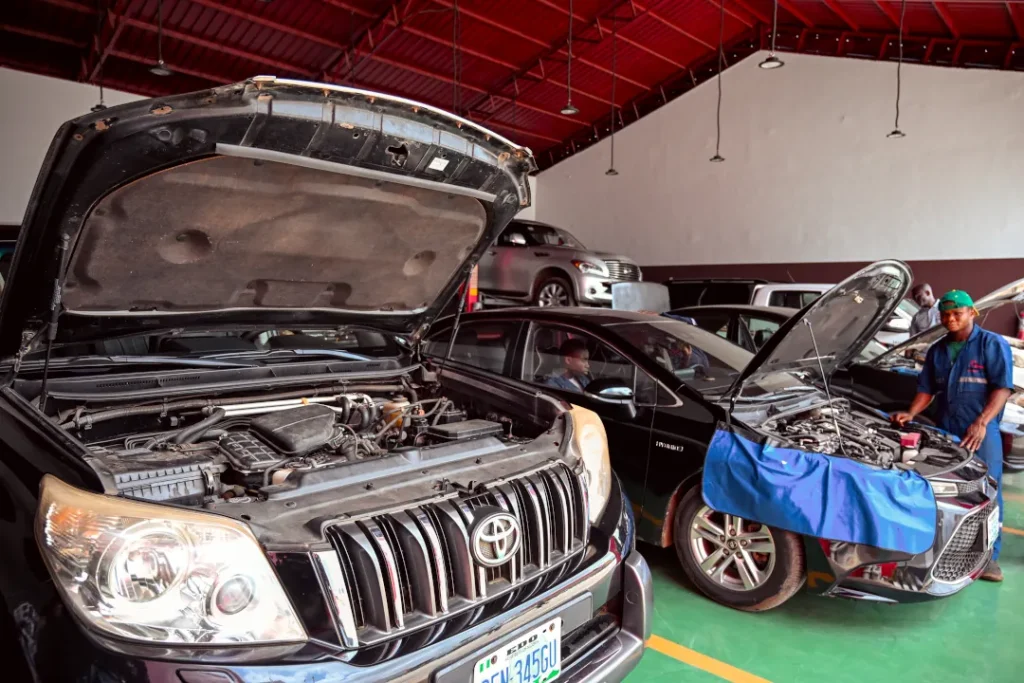
Driving conditions in Nigeria can be demanding on a vehicle.
Potholes, uneven roads, speed bumps, flooding, dust, heavy traffic and long periods of idling all place additional stress on different parts of a car. A maintenance routine that works perfectly under gentler driving conditions may therefore need to be adjusted for everyday Nigerian use.
The important thing is not simply to service your car when it develops a fault. It is to recognise the components that our driving environment tends to punish most.
1. Suspension: Every Pothole Has a Price
Your suspension absorbs much of the punishment from potholes and rough roads.
Repeated impacts can gradually affect shock absorbers, bushings, ball joints and other suspension components.
Watch out for unusual knocking sounds, excessive bouncing, instability when cornering or a vehicle that no longer feels as comfortable as it used to.
Don’t simply say, “Na Nigerian road.”
The road may have caused the problem, but your car still needs attention.
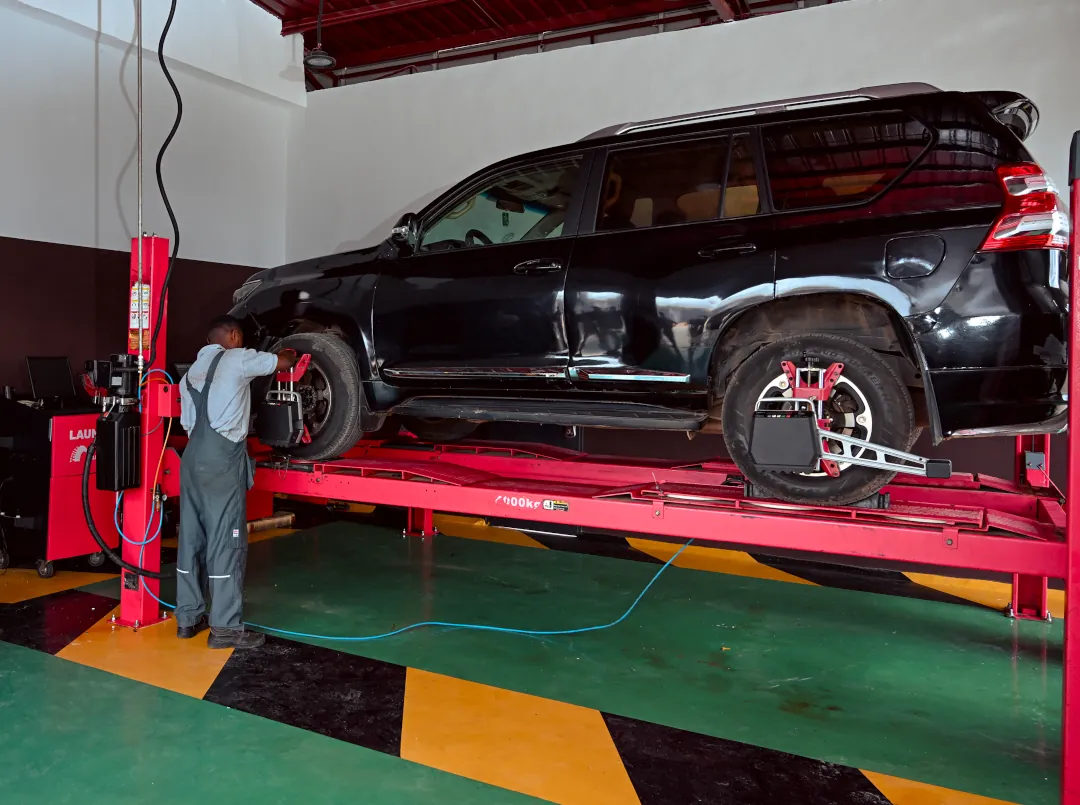
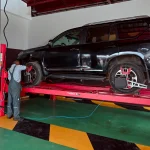
2. Wheel Alignment Should Be Checked Regularly
Hit enough potholes and your wheel alignment can be affected.
One common sign is the vehicle pulling to one side when you are driving on a reasonably level road. You may also notice uneven tyre wear or a steering wheel that no longer sits properly centred.
Correct alignment improves handling and can help prevent premature tyre wear.
3. Your Tyres Deserve Special Attention
Heat, rough road surfaces, potholes and incorrect tyre pressure can shorten tyre life.
Get into the habit of looking at your tyres—not just when one goes flat.
Check tyre pressure, tread condition, cracks, bulges and uneven wear. And don’t forget the spare tyre. Discovering that your spare is also flat after suffering a puncture is an experience best avoided.
4. Traffic Is Harder on Your Car Than You Think
A car stuck in traffic may not be travelling very far, but its engine can still be running for long periods.
Air conditioning, cooling fans and electrical systems continue working while the vehicle is stationary.
This is why maintenance should not always be judged by kilometres travelled alone. A vehicle regularly used in heavy urban traffic can accumulate significant operating hours even with relatively low mileage.
5. Pay Particular Attention to the Cooling System
Nigeria’s climate makes a healthy cooling system especially important.
Keep an eye on the temperature gauge and investigate unexplained coolant loss or overheating promptly.
Radiators, hoses, cooling fans, thermostats and related components should be periodically inspected.
Never treat repeated overheating as normal. An overheating problem that is ignored can eventually result in serious engine damage.
6. Dust Can Affect Your Air Filter
Vehicles regularly driven on dusty roads may require more frequent air-filter inspection.
A heavily clogged filter can restrict airflow to the engine and affect performance.
During routine servicing, ask for the condition of the air filter to be checked rather than assuming it is fine simply because the next scheduled replacement date has not arrived.
7. Floodwater and Cars Don’t Mix
During the rainy season, drivers are sometimes tempted to drive through flooded roads.
That decision can be expensive.
Water entering sensitive electrical or mechanical components can cause serious damage. Deep water can also hide potholes, open drains and other hazards.
If you cannot confidently determine the depth and condition of a flooded section of road, the safer option is usually to avoid it.
8. Speed Bumps Are Not Suspension Tests
Nigeria has no shortage of speed bumps, and some appear with very little warning.
Approach them carefully.
Repeatedly hitting bumps at speed puts unnecessary strain on tyres, suspension components and other parts underneath the vehicle.
Slowing down costs nothing. Suspension repairs do.
9. Listen for New Sounds After a Bad Impact
If you hit a serious pothole, don’t automatically continue driving as though nothing happened.
Pay attention afterwards.
Has the steering changed? Is there a new vibration? Is the car pulling? Can you hear a knocking or scraping sound? Has a tyre developed a bulge?
A quick inspection may identify damage before it becomes more serious.
10. Preventive Inspection Makes Sense in Nigeria
Our road and driving conditions make preventive maintenance particularly valuable.
You don’t necessarily have to wait for your normal service date if something about the vehicle has changed.
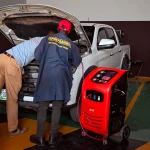
A simple inspection of the tyres, brakes, suspension, steering, fluid levels, battery and cooling system can identify developing problems early.
The Diverse Vehicle Care Tip
Your car doesn’t know whether the pothole belongs to the Federal Government, State Government or Local Government.
It only knows that you drove into it.
So after complaining about the road—and you are entitled to complain—remember to check the car.
Maintain for the Roads You Actually Drive On
Vehicle maintenance shouldn’t be based only on what the odometer says. It should also take account of where and how you drive.
A vehicle frequently exposed to rough roads, dust, flooding, heavy traffic and long periods of idling may require closer attention than one operating under less demanding conditions.
At Diverse Autocare Centre Limited, our message is simple:
Don’t wait for a breakdown to discover what preventive maintenance could have revealed earlier.
Regular inspection can improve safety, protect your vehicle and help prevent avoidable repair bills.
Diverse Vehicle Care
Practical motoring advice from Diverse Autocare Centre Limited.


Leave a Reply