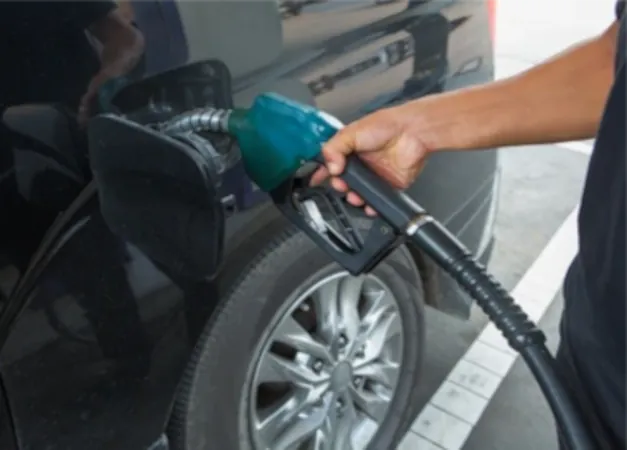
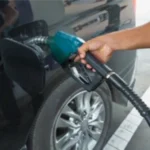
You fill your tank.
A few days later, you are back at the filling station wondering where all the fuel went.
For many motorists, the immediate conclusion is that petrol is disappearing faster because it has become so expensive. But while the price at the pump determines how much you pay, it does not determine how quickly your vehicle consumes fuel.
Sometimes, your car really is consuming more fuel than it should.
The good news is that excessive fuel consumption can often be traced to maintenance issues, driving habits or operating conditions.
Here are some things worth checking.
1. Start With Your Tyres
It sounds too simple, but incorrect tyre pressure can make your vehicle work harder.
Underinflated tyres create greater rolling resistance. The engine therefore has to use more energy to move the vehicle.
Check your tyre pressure regularly and use the pressure recommended for your vehicle.
Remember: the correct pressure isn’t necessarily whatever looks right to the eye.
2. When Last Did You Check Your Air Filter?
Your engine needs air.
A dirty or badly clogged air filter can affect airflow and engine performance. Depending on the vehicle, this can contribute to poor efficiency and sluggish performance.
Nigeria’s dusty environment makes regular air-filter inspection particularly important.
Don’t wait until it looks like something you swept out from underneath your bed.
3. Your Engine May Need Proper Diagnosis
Modern vehicles depend on several sensors and electronic systems to determine how the engine operates.
A faulty sensor or engine-management problem can sometimes cause the engine to run inefficiently and consume more fuel.
This is why simply changing plugs, injectors or other components because someone says “that must be the problem” isn’t always the best approach.
Proper diagnosis should come before replacing parts.
4. Don’t Ignore Your Spark Plugs
On petrol engines, worn or unsuitable spark plugs can contribute to poor combustion, misfiring, reduced performance and increased fuel consumption.
Spark plugs have recommended replacement intervals, although the interval varies depending on the vehicle and type of plug.
If your vehicle is difficult to start, idles roughly, lacks power or has developed unusual fuel consumption, the ignition system may be worth inspecting.
5. Your Fuel Injectors Matter
Fuel injectors are responsible for delivering fuel into the engine.
Problems with the injection system can affect combustion and vehicle performance.
If there is a suspected injector problem, have the system properly inspected rather than repeatedly adding different substances to your fuel tank hoping one will perform a miracle.
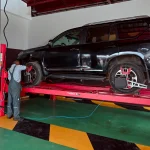
6. Wheel Alignment Can Affect More Than Your Tyres
Poor alignment doesn’t just cause uneven tyre wear.
If your wheels are not properly aligned, the vehicle may encounter additional resistance as it moves. That means the engine may have to work harder.
If your car pulls noticeably to one side or your tyres are wearing unevenly, get the alignment checked.
7. Heavy Traffic Has a Fuel Cost
This is one many Nigerian motorists understand very well.
Sitting in traffic with the engine running and air conditioning working means you are burning fuel while travelling nowhere.
A 10-kilometre journey completed smoothly is very different from the same 10 kilometres spent crawling through traffic for two hours.
So when comparing fuel consumption, consider your driving conditions—not just the distance travelled.
8. Aggressive Driving Can Empty Your Tank Faster
Hard acceleration followed by heavy braking wastes energy.
Accelerating smoothly, anticipating traffic conditions and maintaining a sensible speed can help reduce unnecessary fuel consumption.
Leaving home five minutes earlier may sometimes save more fuel than trying to recover those five minutes with your accelerator pedal.
9. Carrying Unnecessary Weight Doesn’t Help
Is your boot gradually becoming a storage room?
Tools you don’t need, old vehicle parts, containers and other unnecessary items all add weight.
The more weight a vehicle carries, the more energy it generally requires to move.
Clear out what you don’t need.
Your car isn’t a warehouse.
10. Don’t Ignore the Check-Engine Light
If your check-engine light is illuminated, have the vehicle diagnosed.
There are many possible reasons for the warning, some of which can affect engine efficiency and fuel consumption.
Ignoring the warning because the vehicle is “still moving” doesn’t make the underlying problem disappear.
Before Blaming the Filling Station…
When fuel seems to be disappearing unusually quickly, start keeping a simple record.
Fill the vehicle, record the odometer reading and note how much fuel you bought. At the next refill, record the distance travelled and the quantity required to refill the tank.
Do this over several refills.
You will have a much better idea of whether your fuel consumption has genuinely changed.
The Diverse Vehicle Care Tip
Fuel economy isn’t determined at the filling station alone. It begins with the condition of your vehicle and the way you drive it.
Regular servicing, correct tyre pressure, proper diagnostics and sensible driving habits can all contribute to more efficient vehicle operation.
And with today’s fuel costs, every avoidable litre matters.
Petrol Costs More. Don’t Waste What You Buy.
The cost of fuel may be outside the driver’s control.
How well you maintain your vehicle isn’t.
If your vehicle suddenly begins consuming significantly more fuel than before, don’t simply accept it as normal. There may be a mechanical or maintenance reason worth investigating.
At Diverse Autocare Centre Limited, we believe good vehicle maintenance should do more than prevent breakdowns. It should help your vehicle operate safely, reliably and efficiently.
Diverse Vehicle Care
Practical motoring advice from Diverse Autocare Centre Limited.

Leave a Reply